
Every piece of rattan furniture tells a quiet story inside its weave. The stalks, the patterns, the tension of each strand, none of it happens by accident.
Rattan weaving craftsmanship is not a production method alone. It is a living tradition. Skilled artisans carry it forward with their hands and their patience. Knowing what that means helps you choose furniture worth owning.
What Real Rattan Weaving Craftsmanship Looks and Feels Like
Run your fingers across a handwoven rattan piece. You will notice something straight away. The texture feels uneven in the most satisfying way. Natural cane has warmth to it. Synthetic resins cannot copy that quality. That sensory difference is the first honest signal of real rattan weaving craftsmanship.
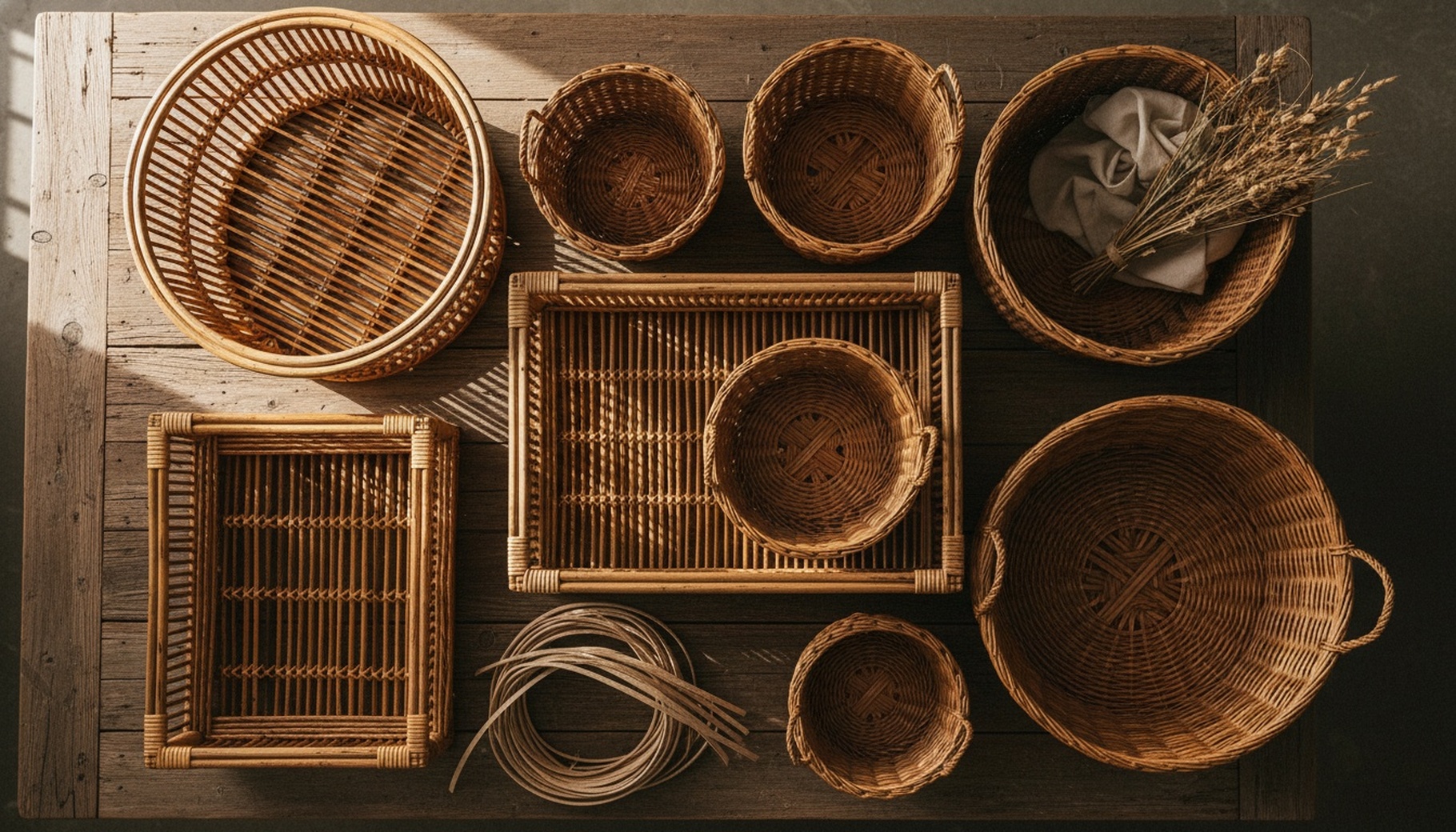
Handcrafted rattan furniture differs from machine-made wicker products in visible ways. A factory-pressed wicker chair uses moulded fibers compressed into uniform shapes. A hand-woven rattan armchair is built from harvested stalks. Each stalk behaves differently. Craftsmen must adjust their tension with every strand they place. That ongoing judgment gives handwoven furniture its durability and its quiet sophistication.
Spotting the difference is easier than most people think. Here is what to look for:
- Weave tension — each strand should sit flush with its neighbors, with no gaps or lifted edges
- Color variation — slight tonal differences across the cane surface confirm plant origin
- Joint quality — where the rattan meets the frame, the binding should be tight and clean, free of exposed nails or resin fills
- Surface texture — genuine cane has a faint grain and a matte sheen; plastic imitations feel slick
- Weight — handcrafted rattan pieces feel denser than their size suggests
The best handmade designs reward close inspection. Ornate patterns become more impressive the nearer you look, not less.
How Traditional Weaving Techniques Shape Durability
Plaiting, twining, and coiling are the three core techniques behind most rattan furniture. Plaiting follows the over-under rhythm of traditional basketry. It is applied across a seat or backrest at scale. Twining wraps two strands around each other as they pass through the warp. This creates a self-locking structure that holds under daily stress. Coiling builds up curved forms from a continuous spiral of material.
Each technique produces a different result. Plaiting spreads seated weight across many contact points. This reduces stress on any single strand. Twining holds its shape under lateral pressure. That is why twined pieces tend to outlast simpler woven alternatives. Coiling lets artisans produce sculptural shapes and elegant curves. Mastery of all three takes years of daily handiwork.
Why Raw Rattan Material Determines Weave Quality
The plant itself sets the ceiling for what any weaver can achieve. Rattan originates from climbing palm vines. These are harvested across Sumatra, Sulawesi, Kalimantan, and other Indonesian provinces. The stem must be consistent in diameter for the cane to split cleanly into strips. Moisture content at harvest affects how the material bends during crafting. Dry cane cracks. Over-wet cane stretches and distorts the finished pattern.
Cane strips are the outer peel of the rattan stalk. They are used for fine surface weaving. This is what gives rattan furniture its decorative texture and visual warmth. The inner core is softer and more flexible. It forms the structural framework beneath. Confusing these two materials leads to poor purchasing decisions. A piece sold as rattan but built from bamboo sticks and resin filler is not rattan at all. Knowing the difference protects you from paying handcrafted prices for industrial shortcuts.
What Rattan Wicker Decor Adds That Other Materials Cannot
There is a reason rattan furniture has moved from colonial-era conservatories to contemporary interiors. It has never lost its appeal. The material carries warmth that metal, glass, and synthetic upholstery cannot match. A handwoven rattan ottoman or a woven pendant chandelier brings natural texture to a room. It feels refined and unpretentious at the same time.
Rattan’s versatility is unusual among furnishing materials. The same weaving traditions that produce practical placemats and baskets also create standout centrepiece armchairs and ornate wall hangings. That range makes rattan a reliable anchor for interior design across many styles. Modern designers are rediscovering this. The trend shows no signs of slowing.
The Artisan Weavers Keeping Rattan Craftsmanship Alive Today
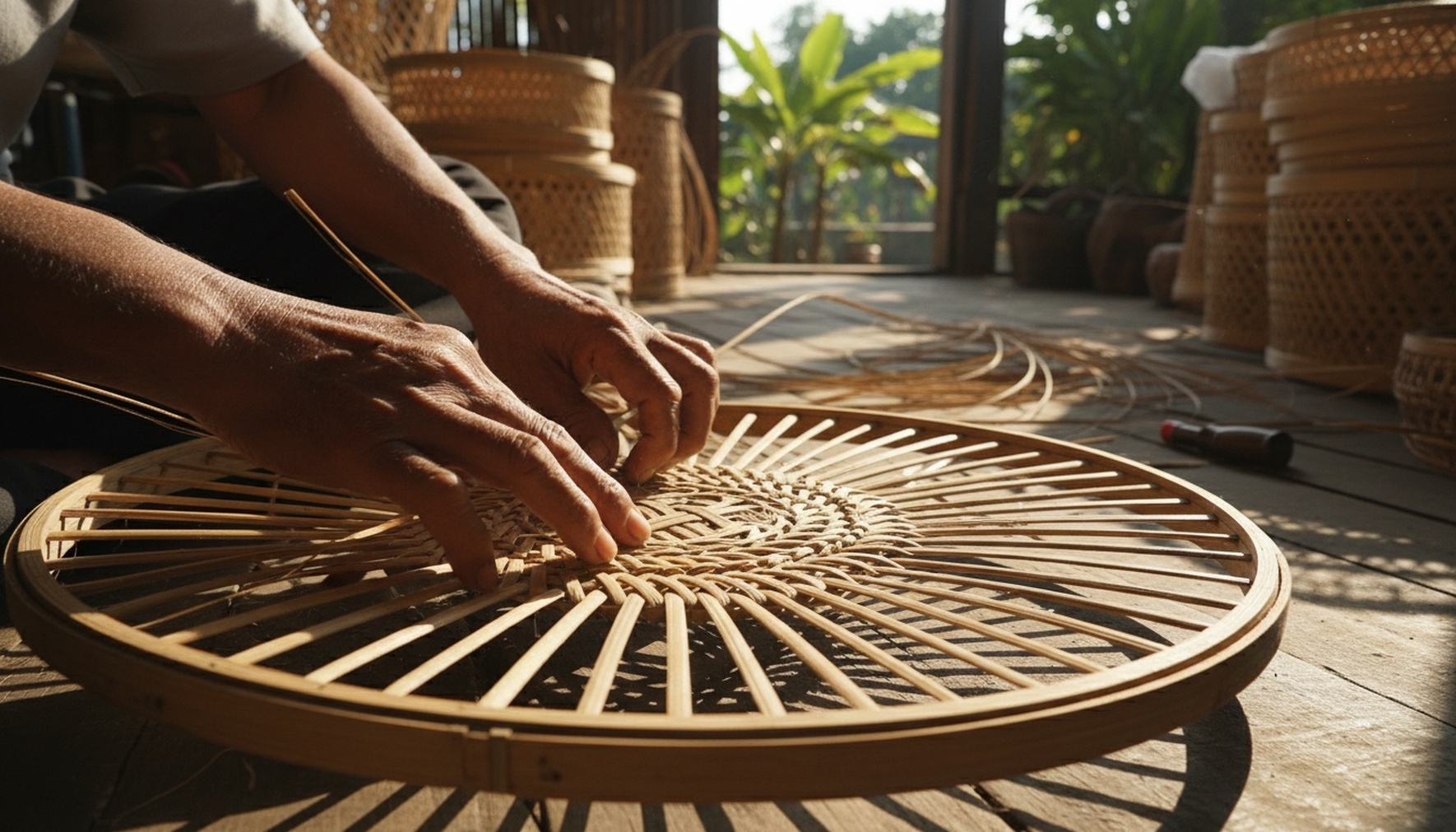
Behind every handcrafted rattan piece is a person whose livelihood depends on this work. Rattan weaving communes are found across Indonesian provinces. Central Java and South Sulawesi have the longest traditions. The craft has been practiced there for generations. Weavers begin learning as teenagers. They work alongside family members before taking on independent pieces. Reaching a level of artisanship good enough for complex patterns takes close to a decade of daily practice.
A single handwoven rattan chair takes six to fourteen hours of skilled handiwork. The weave pattern and size of the piece determine the time. That labor explains the price difference between artisanal rattan furniture and mass-produced alternatives. What you pay for is not just the material. It is the mastery of the hands that shaped it.
The challenge facing rattan weaving traditions is real. Younger generations in rattan-producing regions move toward urban employment. Factory-produced pieces undercut handmade prices by wide margins. Some cooperatives respond by connecting with international designers and heritage-conscious buyers. This preserves both their livelihoods and the craft’s continuity. Supporting rattan artisans through informed purchasing is one of the most practical ways to help.
The industry’s strength and its vulnerability come from the same source. Every piece depends on human skill, not automated production. If the weavers disappear, the craftsmanship goes with them. That is not melodrama. That is how intangible heritage works.
Honest Answers to What People Ask About Rattan Weaving
Many buyers come to rattan furniture with the same points of confusion. The most common is terminology. Rattan is the raw plant material. It is a climbing palm vine from tropical forests across Southeast Asia.
Wicker is a weaving technique, not a material. It can be applied to rattan, bamboo, willow, or synthetic fibers. Cane is the outer peel of the rattan stalk. It is sliced into thin strips for surface weaving. Knowing these differences stops a lot of expensive confusion when shopping.
Sustainability comes up often, and it deserves a plain answer. Rattan is one of the fastest-regenerating natural materials used in furniture production. Harvesting it does not require felling the parent plant.
The vines regrow from their root systems. Managed rattan agriculture supports farming livelihoods across Indonesian and Southeast Asian communes. The footprint still depends on sourcing practices.
Rattan furniture made under fair labor conditions with documented material origins carries a different ecological weight from cheap imitations.
Some readers also want to try rattan weaving themselves. Simple coiling and flat-weave panels are accessible to first-time makers. Pre-soaked cane strips, a basic timber frame, and a bodkin are all a DIY beginner needs to start.
The learning curve is real but satisfying. Many enthusiasts find the repetitive rhythm of weaving calming. Hands-on workshops speed up progress far more than video tutorials alone.
Rattan weaving craftsmanship is centuries old. It shows no signs of disappearing while people still value what skilled hands can produce. The warmth, the durability, and the sophistication of every handwoven piece trace back to artisans whose work deserves recognition.
If you are ready to source furniture that reflects genuine craftsmanship, our team of rattan furniture manufacturers would be glad to help you find the right fit.