
Walk into any room with a rattan sofa or woven armchairs, and something shifts. The space feels lighter, warmer, and more alive. That quality does not come from styling alone, it comes from the material. Knowing what rattan furniture is made from helps you buy smarter and value the craft behind every woven surface.
Most buyers think rattan is another word for wicker or bamboo. It is not. Let me explain the difference, and why it matters before you spend a dollar.
The Core Materials Used in Rattan Furniture Construction
Rattan belongs to the palm family. It grows as a climbing vine in tropical forests, reaching up to 200 meters long. Unlike bamboo, which is hollow, the rattan stem is solid throughout. That solid core makes it flexible and structurally sound for furniture.
Craftsmen work with two parts of the plant. The pole, the full-diameter stem, 15mm or wider. forms the skeleton of chairs, sofas, and benches. The peel, the smooth outer skin split from the pole, becomes the weaving material. Many pieces in design showrooms use both: a pole frame covered in hand-applied peel weave.
Modern rattan furnishing also relies on other components. Frames use steel or rustproof aluminum for rigidity, especially in patio sets. Lacquer or varnish layers seal the fibers against humidity. Cushions use padded polyurethane foam wrapped in outdoor-grade fabrics built to resist weathering and wear.
Many brands now use synthetic rattan for outdoor furniture. These are polyethylene resin strands woven over aluminum frames. Polyethylene is waterproof, UV-stable, and easy to maintain. Natural cane can crack or bleach in direct sun, synthetic rattan does not. The difference is tactile: synthetic strands feel firm and uniform, while natural rattan has warmth and texture that collectors prize.
How Rattan Furniture Is Crafted: From Raw Material to Finished Piece
Making quality rattan furniture blends forest knowledge with skilled handwork. The process involves more steps than most buyers expect. Human judgment matters at every stage.
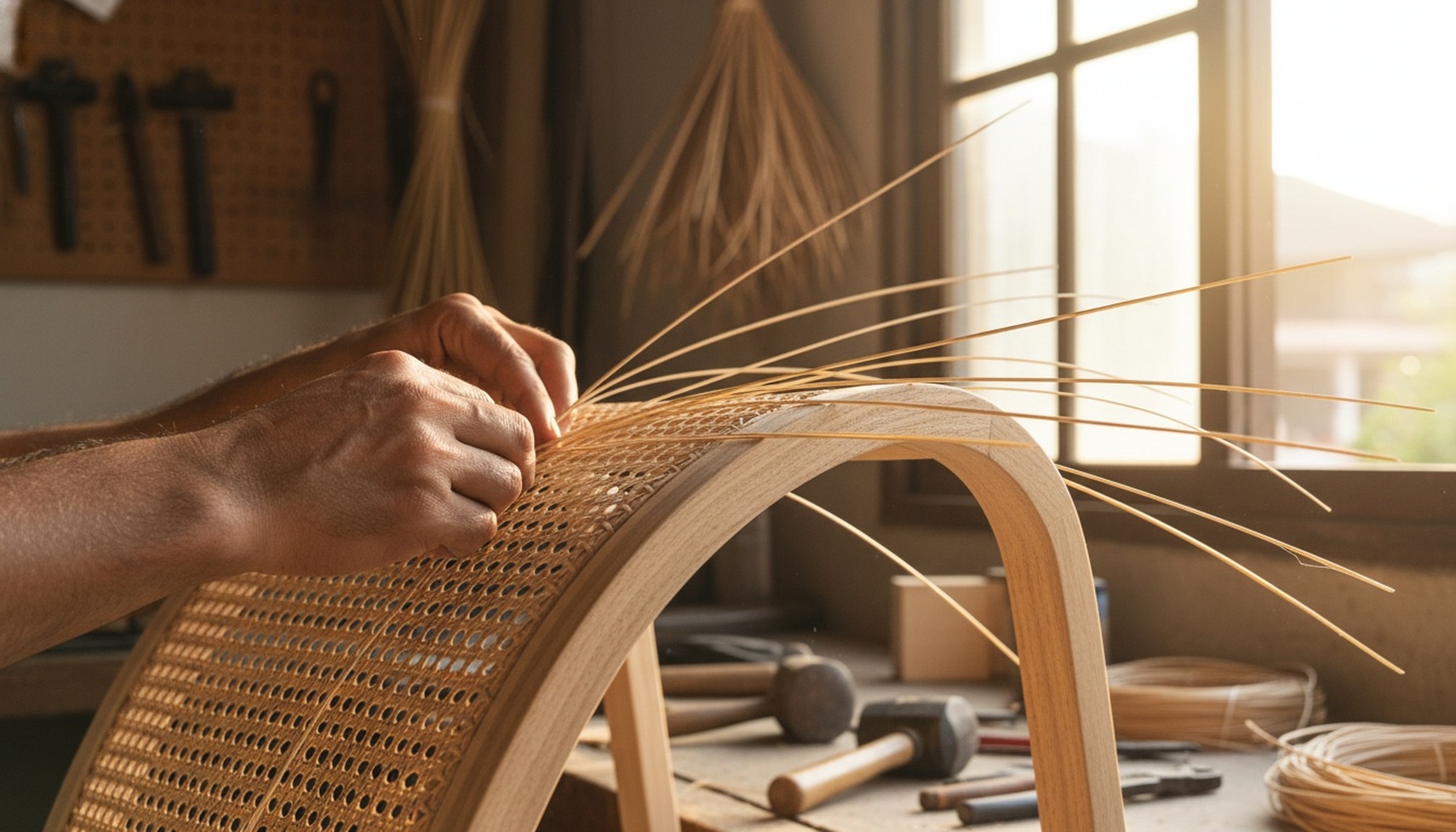
Harvesting and Preparing Natural Rattan Vines
Harvesters select mature canes by diameter and cut them by hand in tropical forests. Indonesia supplies most of the world’s raw material. Responsible rattan harvesting Indonesia leaves young shoots intact. The forest can regrow within a few seasons. Slow-growing hardwoods like teak wood, oak, and mahogany cannot offer that advantage.
After cutting, workers strip the poles of leaf sheaths and dry them. Kiln-drying brings internal moisture to a stable level. This prevents warping and stops mould from forming during transport. Workers then sort dried poles by diameter and grade before workshop use.
Frame Building and Structural Joinery Techniques
Building a rattan frame starts with heat. Craftsmen hold poles over an open flame or steam them to soften the fibers for bending. A skilled worker shapes the rounded back of an armchair in under a minute. The wrong temperature scorches or snaps the cane.
Joints use binding cane lashed tightly at each intersection. This traditional joinery method flexes under load. It does not crack like rigid dowels. Premium pieces add steel inserts inside the pole at high-stress points. Tight lashing with no gaps at corners is the best sign of a well-built frame.
Weaving Patterns and the Role of Skilled Craftsmen
The woven surface is where furniture becomes craft. Each strand of rattan peel moves over and under the frame in set sequences. Common rattan weaving craftsmanship patterns are open-weave, herringbone, and diagonal. Open-weave is light and airy. Herringbone is dense and decorative. Diagonal weaves add visual movement across flat surfaces.
Handcrafted pieces have slight variation in strand spacing and tension. That irregularity is proof of authenticity, basketry made by human hands. A uniform surface usually signals machine-made synthetic weave.
Finishing, Coating, and Surface Protection Methods
After weaving, every piece goes through sanding and surface prep. Natural rattan gets a base sealant, then lacquer or varnish in the chosen tone, pale natural to deep walnut. Varnishing seals the fibers, slows moisture absorption, and gives the surface a color that ages well.
Outdoor pieces need stronger protection. UV-resistant topcoats and oil treatments add years to garden and patio sets. Synthetic PE rattan does not need this. UV stabilizers go into the polyethylene resin at the factory. The protection is built in from the start.
Natural vs Synthetic Rattan: Which Material Is Right for You?
The choice between natural and synthetic rattan depends on where the furniture will sit and how much upkeep you want.
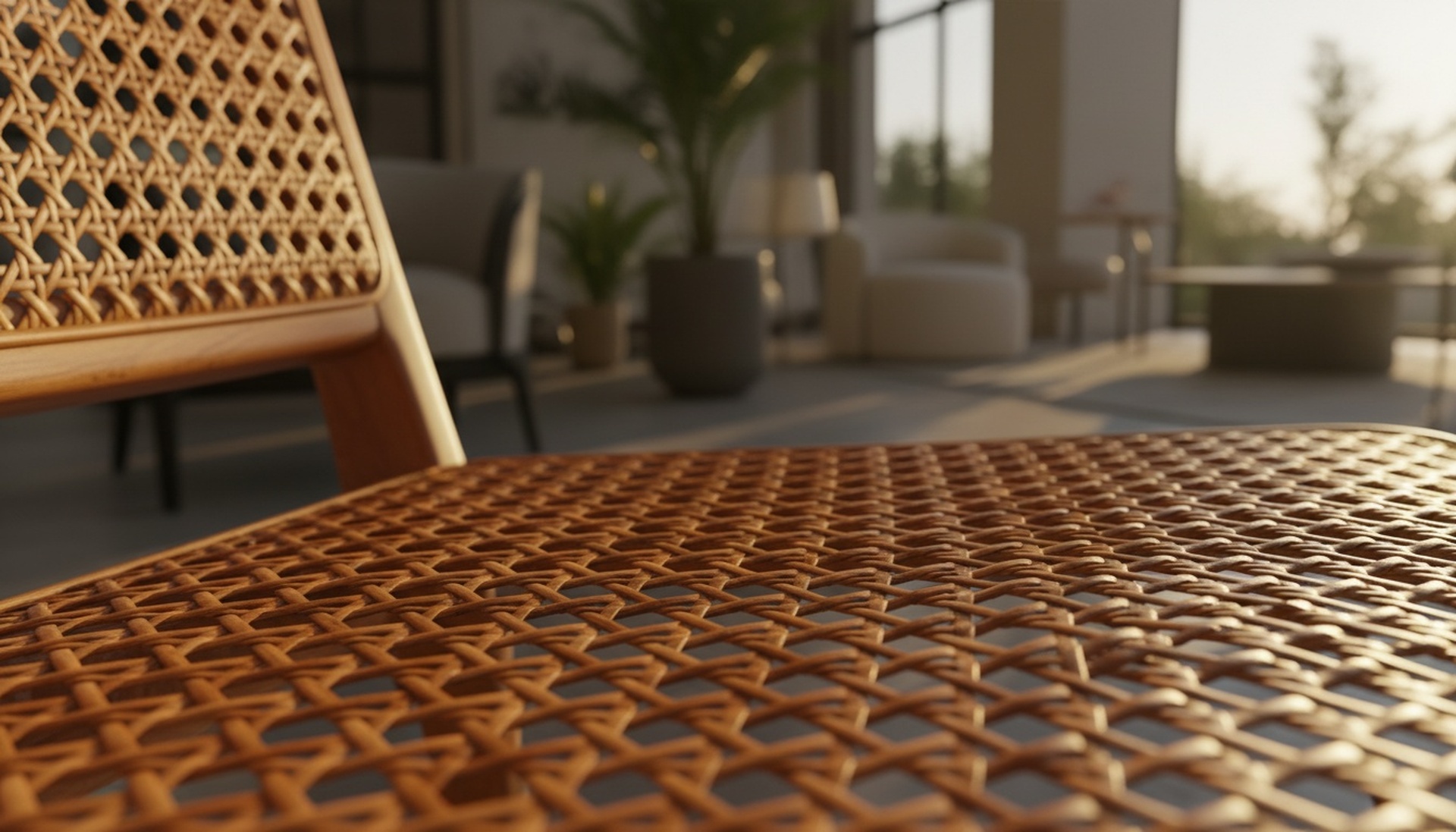
For indoor spaces: a living room sofa, a reading chair, a lounge corner, natural rattan is hard to beat. It brings warmth, texture, and organic ambiance. Synthetic materials cannot match that feel. Natural rattan is also repairable: broken strands can be replaced without discarding the whole piece.
For outdoor and patio settings: garden sets, backyard benches, poolside loungers, porch couches, synthetic PE rattan wins. It holds up to rain, humidity, and UV exposure without fading or cracking. Cleaning takes a damp cloth. The aluminum frame will not rust, even near the coast.
Here is a quick comparison:
- Natural rattan: warm aesthetics, repairable, needs periodic re-lacquering, best for indoor and covered spaces
- Synthetic PE rattan: weatherproof, low maintenance, consistent color, best for fully exposed outdoor use
Long-term cost matters too. A well-kept natural rattan chair can last decades and develop a weathered patina. A synthetic set needs little upkeep but cannot be repaired when the weave breaks. Replacement is the only fix.
When buying, lift the piece and check the frame weight. A piece that feels too light may have thin-gauge steel or weak joints. Press the seat back gently and feel for flex at the corners. A quality piece should feel solid, with no creaking or movement at the joints.
Whether you are furnishing an apartment living room or a garden patio, the supplier matters. Working with quality rattan furniture manufacturers means you get pieces built to last. They are made with the right materials, finished with care, and backed by real expertise.