
Deep inside Kalimantan’s rainforest, a harvester swings his parang through dense undergrowth. He is not cutting timber. He is after rattan, one of nature’s most flexible and profitable forest commodities.
Indonesia supplies over 80% of the world’s rattan. Yet most people who sit on a rattan chair have never asked: where does this plant come from?
Where and How Indonesian Harvesters Collect Rattan From the Forest
Rattan grows wild across Indonesia’s lowland rainforests. You can find it in riparian zones and deep forest canopy understories. The main harvesting islands are Kalimantan, Sulawesi, and Sumatra. These ecosystems support hundreds of Calamus and Daemonorops species. Both are the dominant rattan palm genera collected for trade.
Indigenous peoples and smallholder farmers form the backbone of this workforce. They enter the jungle each year, often on foot for hours. Their tools are simple, passed down through customary practice. A skilled cutter reads the forest floor like a map. He identifies mature stems by height, leaf condition, and diameter before cutting begins.
Wild rattan does not grow in neat rows. Stems climb through the forest canopy, wrapping around trees and pandanus palms. Harvesters pull each stem down with care to avoid breakage. They cut at the base, then peel away spiny leaf sheaths on the ground before bundling for transport.
How does rattan leave the jungle? River flotation along riparian waterways was the primary method for generations. Workers bundle collected stems and float them downstream to collection points. In more accessible provinces today, vehicles handle transport. This shift raises emission concerns in sensitive ecosystems.
Agroforestry and Silvicultural Cultivation on Smallholder Land
Not all Indonesian rattan comes from wild forests. A growing share comes from cultivated agroforestry systems. Smallholder farmers intercrop rattan seedlings alongside cocoa, bamboo, and oil palm on community land. This silvicultural approach fits rattan into existing vegetation without clearing new ground.
Transplanting seedlings requires patience. Growers manage plots across several hectares. They apply organic fertilizers and monitor vegetative growth over a 7 to 10 year cycle. The wait is long. But the returns reward good stewardship.
Rattan cultivation under forest canopy supports carbon sequestration. It also creates wildlife corridors for endemic mammals and reduces deforestation pressure. For many subsistence farmers, rattan farming is a real alternative to land conversion.
Wild Rattan Extraction vs. Cultivated Plantation Harvesting
Wild extraction and plantation cultivation each carry clear trade-offs. Gathering directly from nature lowers upfront expenses. Farmers skip pricey seedling investments completely. However, ongoing deforestation and expanding oil palm farms constantly shrink available forest lands.
Cultivated rattan gives suppliers and manufacturers more consistent quality. It demands more capital, silvicultural knowledge, and long-term commitment from smallholder producers. Stem quality differs between wild and cultivated origins, and buyers can tell the difference. Understanding rattan furniture materials starts with knowing this sourcing divide.
The Impact of Deforestation and Exploitation on Rattan Supply
Deforestation is the greatest threat to Indonesia’s rattan sector. Logging, mining, and agricultural expansion reduce forest inventory each year. Pesticide runoff and diesel pollution from nearby sawmills degrade riparian ecosystems where rattan grows.
The impact reaches beyond rattan. Elephants, endemic orchids, and riparian mammals share the same forest ground. Over-exploitation without restocking efforts pushes endangered species further toward extinction. The Ministry of Forestry has developed masterplans for reforestation and sustainable forestry. Yet fieldwork findings show gaps in village-level implementation.
Sustainability Challenges Facing Indigenous and Smallholder Harvesters
Harvesters face a tough reality. Market prices shift without warning. Outside buyers often undercut local cooperatives. Access to certified supply chains stays limited for most rural producers. Diesel costs, mildew prevention, and moisture management during transport all cut into profits for smallholder workers.
Community cooperatives are working to change this. They connect producers directly to verified buyers. They also promote ecologically sound harvesting practices aligned with CITES regulation standards. These efforts strengthen harvesters’ livelihoods while protecting the ecosystems this sector depends on.
Post-Harvest Rattan Processing: From Raw Stems to Market-Ready Commodity
Once rattan stems reach a processing facility, a precise sequence begins. Raw palm fiber becomes a graded, export-ready commodity. Each stage matters. Skip one, and quality drops at every point after.
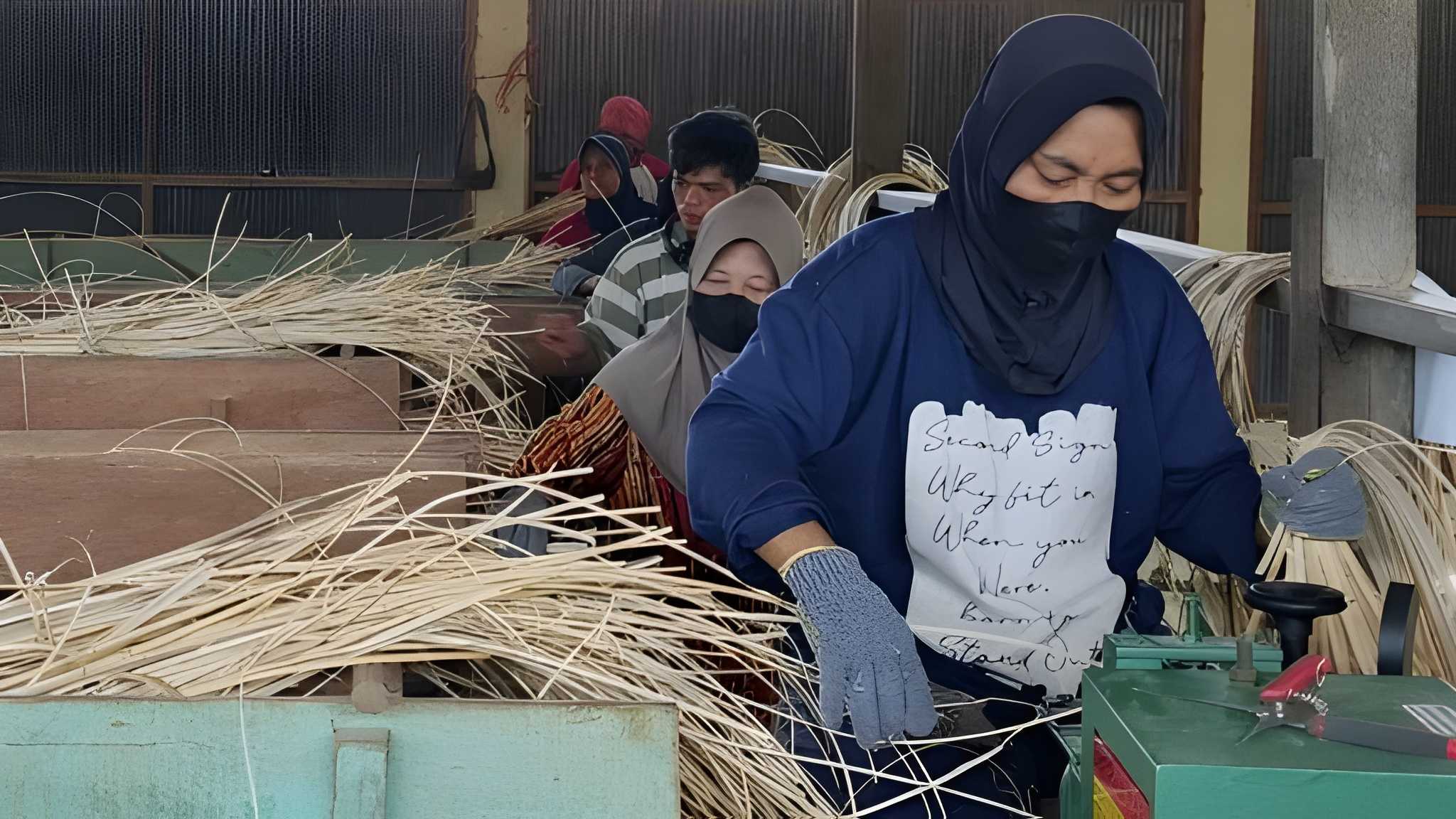
The processing stages follow a clear order:
- Peeling: Workers strip outer skin and silica residue from each harvested stem.
- Boiling: Stems are boiled in palm oils to remove resins and soften the fiber.
- Sulfuring: Sulfur fumes prevent mildew and insect damage during storage and transport.
- Kiln-drying: Controlled kiln heat reduces moisture to export-grade standards.
- Grading: Workers sort dried stems by diameter, length, and quality for different end uses.
Jepara, located in Central Java, is Indonesia’s most important furniture production hub. Factories there handle rattan at scale, supplying both domestic manufacturers and global export markets. Jepara’s skilled artisans have refined rattan processing over generations. Their craftsmanship turns raw stems into finished furniture components with precision. Want to see where processed poles go next? Explore rattan weaving craftsmanship to understand how raw material becomes a finished woven product.
Properly processed rattan also offers strong biodegradability. This draws sustainability-focused consumers across European and Asian markets. The demand is real, and Jepara’s producers meet it with consistency.
Indonesia’s Rattan Export Market: Trade Policy, Industry, and Global Supply
Indonesia’s 2011 raw rattan export ban changed global trade. Before the ban, outside buyers sourced unprocessed stems at low cost. This left Indonesian producers with thin margins. The policy forced a shift. Domestic factories and artisans now process rattan locally before export, capturing greater profit per tonne.
The result has been uneven. Domestic manufacturers and handicraft producers gained a clear competitive edge. Global buyers, across European and Asian markets, faced shortages and supply disruptions at first. Over time, Indonesian exporters built stronger direct relationships with furniture industry buyers, cutting out traditional middlemen.
For consumers comparing natural materials, the distinctions covered in rattan vs wicker vs bamboo help explain why Indonesian rattan holds premium positioning in global markets. Its tensile strength, biodegradability, and craftsmanship versatility keep it irreplaceable as a furniture commodity.
Rattan forests harvested with care support carbon sequestration, wildlife preservation, and smallholder income at the same time. No other tropical forest commodity delivers that combination.
Whether you are a buyer, designer, or brand sourcing natural materials, work with experienced rattan furniture manufacturers based in Jepara who understand the full chain from forest to finished product. That knowledge is the difference between material that is ethically sourced and stock that is simply cheap.