
Every homeowner faces this question at some point. You pick up a handwoven rattan sofa. Then you glance at a smooth plastic chair beside it. Both look decent. Both fit the budget. But which one truly suits your home, your lifestyle, and your long-term needs? This comparison goes deeper than price tags. It is about your lifestyle, comfort, and decoration. Choose furniture that shows your personal style.
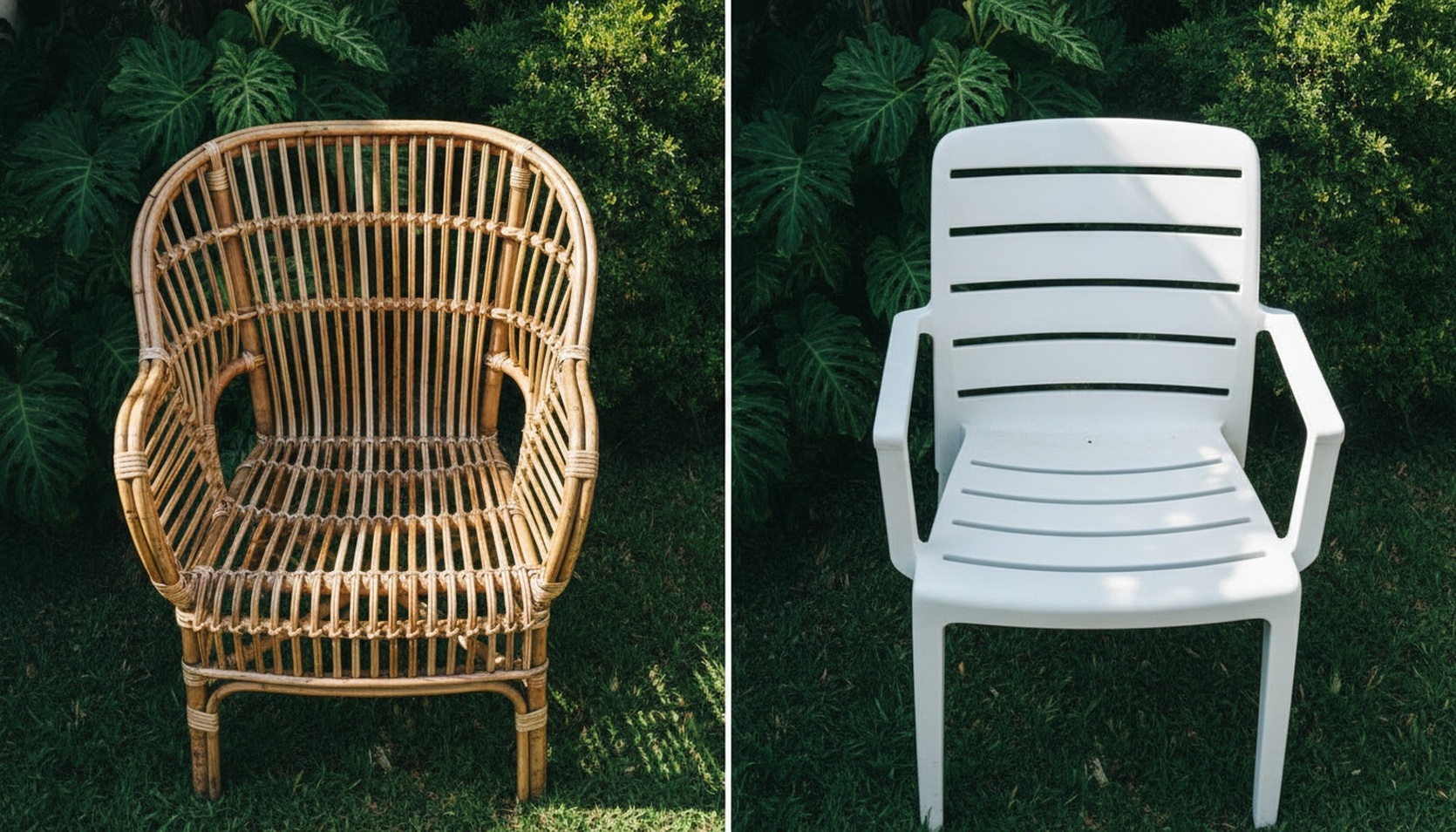
Our team has worked alongside artisan carpenters and furniture manufacturers for years. We know both materials well. Here is our honest take.
What Sets Rattan and Plastic Apart as Materials
You’ll find rattan growing naturally in tropical habitats. It’s common across Indonesia, Malaysia, and the Philippines. Skilled carpenters harvest its long, pliable stems. They weave them by hand into chairs, sofas, baskets, and ornamental structures. The result is a porous, organic surface with an earthy warmth that no factory can fully replicate.
Plastic furniture, by contrast, comes from fossil fuel compounds. Manufacturers rely on compounds like polypropylene, polyethylene, and polyvinyl. These thermoplastic materials produce lightweight, uniform shapes at scale. Some manufacturers add antioxidants and stabilizers to slow weathering. Synthetic options like polyrattan and resin wicker mimic the woven look. Underneath, they wrap plastic compounds over a steel or metal core.
Know the various features of these materials before buying. It helps you find the right style. Want to understand how rattan differs from similar natural fibers? This guide on rattan vs wicker vs bamboo breaks it down for you.
Durability, Upkeep, and Weather Resistance
Plastic withstands humid, wet environments better than natural rattan in most cases. It resists mould, moss, rot, and stain without much effort. Rustproof and weatherproof, a good plastic patio set needs little more than a quick rinse. That durability makes plastic a go-to choice. Homeowners use it around garden patios, pools, and firepits without worry.
Natural rattan, however, is prone to moisture damage without proper care. Left exposed, it can turn moldy and brittle. It needs varnish, coatings, and occasional repainting to preserve its appearance. Humid climates are tough on natural rattan. Storing it indoors or under cover during heavy rain helps it last longer.
The Repairable Advantage Plastic Cannot Match
Here is where rattan earns back serious ground. When a plastic chair cracks or arms snap, you typically replace the whole piece. Rattan is repairable by design. Skillful carpenters can replace individual parts, re-weave damaged sections, and restore structural integrity. A quality rattan set, maintained well, outlasts cheap plastic alternatives by years.
The cost of upkeep for rattan is real, but it is an investment in longevity rather than a cycle of replacement. Buying low-quality faux items brings huge drawbacks. This bad material crumbles fast, leaving you with a lot of trash.
Comfort, Design, and Environmental Considerations
Rattan’s natural flex makes it a warmer seat than rigid plastic. Add cloth cushions and the comfort level rises fast. A covered porch or indoor lounge setup becomes a genuinely inviting space. Plastic chairs feel firm, flat, and uniform. These setups work fine for a backyard table. However, they lack comfort for long hours of lounging.
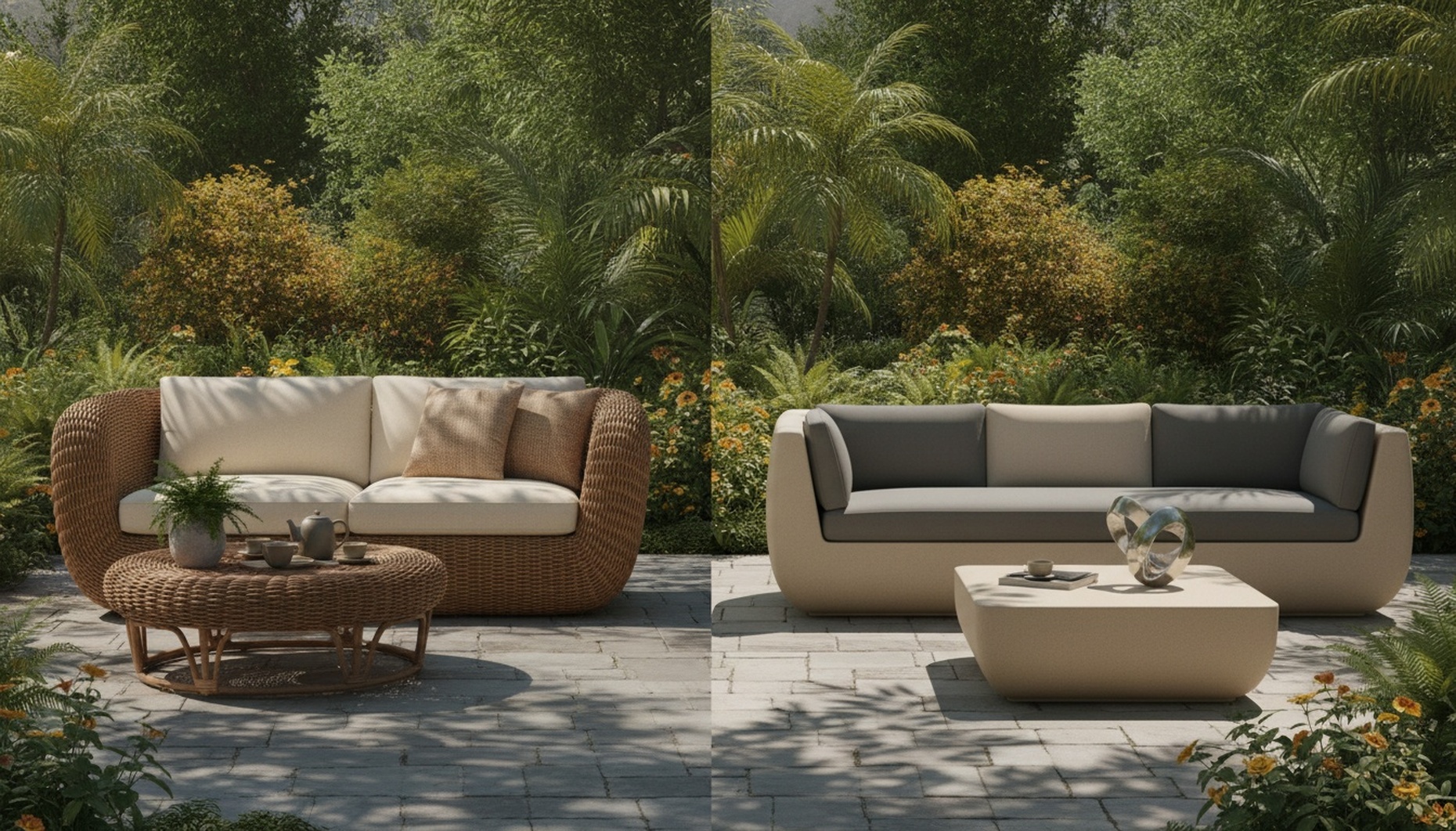
On design, rattan offers something plastic simply cannot manufacture: character. Rattan’s handwoven surface brings a rustic, vintage character to any room. It pairs naturally with teak, beech, and greenery-filled earthy interiors. Plastic suits modern and minimalist styles well. It comes in large sectional designs across a wide range of shapes and sizes.
Curious how rattan performs across different furniture types? This overview of rattan furniture materials covers thickness, coatings, and structural quality.
The Environmental Difference
Rattan is biodegradable. It returns to the soil at end of life without leaving micro-compounds behind. As a renewable plant, rattan harvest supports artisan communities. Managed well, it protects natural habitats instead of damaging them.
Some individuals state that recycled ethylene and recyclable resins protect the environment. That makes sense for expensive, premium brands. However, cheap alternative options quickly pile up in landfills, creating massive drawbacks.
Consider what you prioritise:
- Greener lifecycle: Natural rattan biodegrades completely and supports organic ecosystems.
- Lower short-term cost: Plastic is cheaper upfront and requires minimal maintenance.
- Craftsmanship value: Handmade rattan crafts offer a unique traditional aesthetic. This beautiful style changes how your space looks.
- Practicality: Plastic suits high-exposure outdoor environments where weathering is relentless.
Choosing What Genuinely Suits Your Home and Budget
Your decision depends on where you plan to use the furniture and how long you want it to last. Got a fully exposed garden patio in a coastal climate? A quality polyrattan or coated plastic set is the practical, honest choice. Natural rattan is perfect for your indoor lounging sectionals. This durable material beats cheap plastics every time.
Do not let a cheaper price tag decide for you. Buying a sturdy rattan furnishing set saves money. It beats replacing cheap plastics three times over.
Ready to explore handmade options from skilled artisan workshops? A trusted rattan company in Indonesia connects you directly to solid craftsmanship and ethical sourcing. That is where genuine rattan furniture Indonesia sets its standard, designed by skilled hands across generations.