
Most homeowners buy a beautiful patio set, then watch it crack after one rainy season. The gap between what buyers expect and what they get is frustrating. It usually comes down to one thing. Buyers usually learn what makes outdoor furniture durable only after they buy it.
We spent years crafting and testing outdoor rattan furniture across various weather conditions. This guide shares what we learned from real experience, not from a catalog. By the end, you will know exactly what to inspect so your next buy truly lasts.
Understanding Rattan Materials Before You Buy

Rattan furniture generally falls into two categories, and the difference matters more than most buyers realize. Natural rattan comes from palms and vines found in tropical rainforests, and it has a warm, organic texture. Synthetic rattan, often called PE rattan, is a resin material woven to mimic that same look.
Natural rattan looks elegant, but it fails under prolonged sun and moisture. Synthetic rattan withstands weather much better. That makes it a smarter pick for patios, pool areas, and gardens. If you love the natural look, save it for covered porches or sunrooms instead.
The frame beneath the weave matters as much as the rattan. Aluminum frames resist rust and stay light. Treated hardwoods like teak or oak add strength and a classic look. Cheaper steel frames without rustproof coating tend to weaken fast in humid climates.
A common misconception is that all rattan furniture is automatically weatherproof. That is simply not true, and it explains why so many sets fail within a year. Check the material specs before you assume a set can handle sun and rain.
Natural Rattan Vs. Synthetic Rattan For Outdoor Use
If your patio gets full sun most of the day, synthetic rattan is the safer investment. It holds its color, resists cracking, and handles humidity without warping over time. Natural rattan ages well indoors or under a roof. There it stays protected from harsh weather.
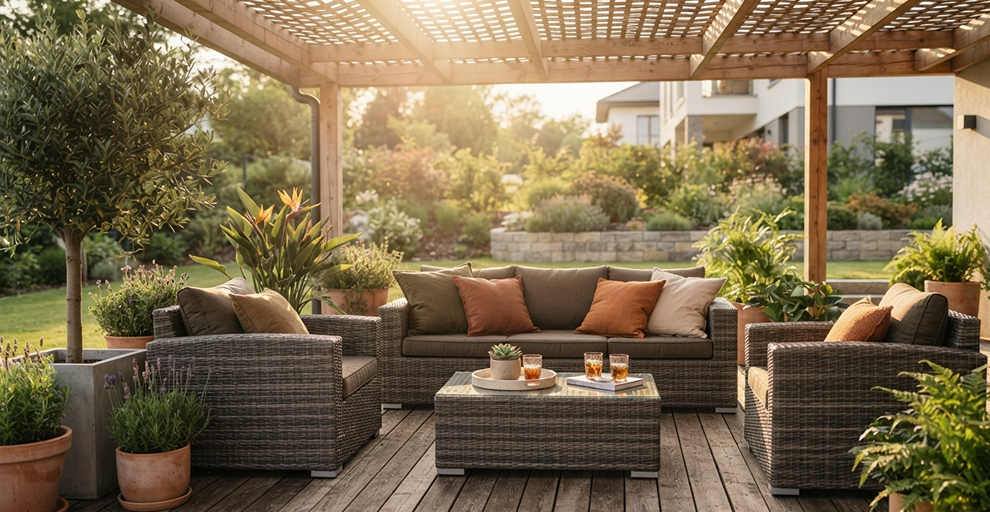
Think about how you actually use your outdoor space before deciding. A shaded veranda calls for different materials than an exposed backyard corner. Matching the material to your specific site conditions prevents disappointment down the road.
Evaluating Durability Against Weather and Everyday Use
Weather is the real test for any outdoor furniture, not showroom lighting. Sun exposure fades color and dries out natural fibers, while humidity encourages mold and softens weak joints. Good synthetic rattan includes UV-resistant coating that slows this fading process considerably.
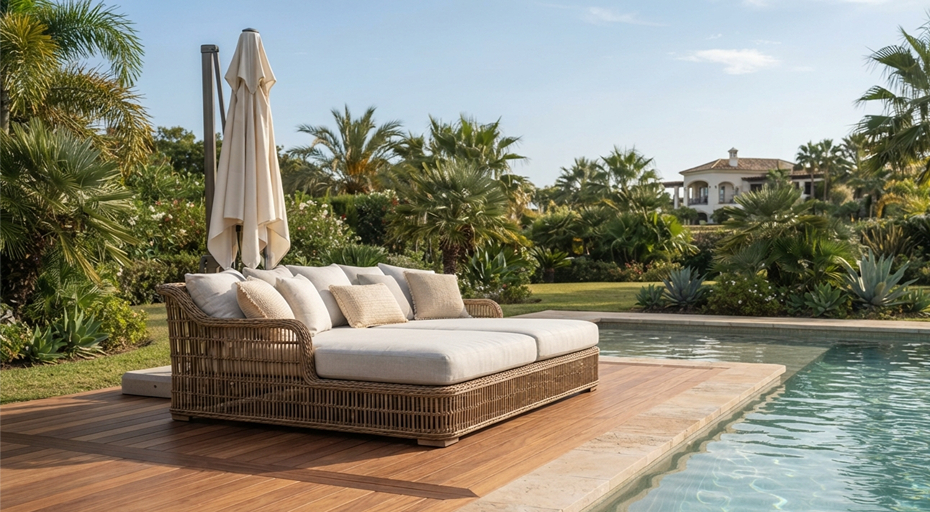
Rain is another factor people underestimate until their cushions start smelling musty. Quick-drying, water-resistant fabric protects your sofas, loungers, and daybeds from long-term damage. Foam that resists water absorption also keeps seating comfortable instead of soggy after a storm.
Daily upkeep does not need to be complicated, and that is good news for busy homeowners. A quick dusting every week keeps dirt and cobwebs from settling into the weave. Covering your furniture with a tarp during storms adds an extra layer of protection.
Taking good care of your rattan furniture helps it last longer. Simple habits prevent most common issues. Wipe surfaces and store cushions during heavy rain. Skipping these small steps is usually why furniture ages faster than expected.
Choosing Cushions And Covers That Hold Up Outdoors
Cushions often wear out before the furniture frame does, so choose them carefully. Polyester or solution-dyed fabric resists fading and mold much better than indoor fabrics. Look for washable covers, since regular cleanings keep pads fresh through every season.
Stitching quality tells you a lot about how a cushion will perform over time. Reinforced seams and dense foam usually mean better comfort and a longer lifespan. Loose threads or thin padding are early warning signs of a shorter shelf life.
Protecting Rattan Furniture Through Seasonal Changes
Windy or humid seasons strain outdoor rattan furniture, especially at the joints. Check for loose weaving or wobbly connections on your sofa before the weather turns. Catching small issues early prevents costly repairs later on.
Covering furniture properly during off seasons extends its life significantly. A breathable cover prevents dampness from building up under the fabric. Trapped moisture often harms more than direct rain. This one habit alone can add years to your furniture’s lifespan.
Matching Furniture Style To Your Outdoor Layout
Let function guide your style choices, especially when space feels tight. Choose a compact sectional or loungers for narrow patios instead of a bulky sofa. Larger backyards fit a full dining set or spacious ottomans without feeling cramped.
Your layout should also account for natural walkways and traffic flow. Furniture placed too close to doors or walkways creates awkward, cramped movement. Leave a few feet of space around each seating area. That extra room makes the whole space feel better.
Design style matters too, whether you prefer modern silhouettes or traditional woven textures. Matching your furniture to your home’s exterior gives the space a polished look. Many homeowners now lean toward sustainable rattan furniture, which pairs eco-conscious materials with lasting style.
Before making a final decision, check for craftsmanship details like tight joints and even weaving patterns. A trustworthy warranty also signals that a manufacturer stands behind its work. Buying from an established outdoor rattan furniture supplier such as our rattan company Indonesia team gives you access to tested materials, honest guidance, and pieces built to handle real outdoor conditions for years to come.