
Your rattan sofa looked stunning on day one. But after a few months, dust gathers in the weave and the cushions feel stiff. You might wonder which cleaner is safe. That confusion is normal. Here’s why: rattan needs different care than wood or metal.
Once you learn a few simple rules, caring for your furniture feels effortless.
Why Rattan Furniture Needs Different Cleaning Rules
Rattan plant fibers flex and breathe unlike standard hardwood materials. Harsh chemical cleaners strip the cane’s natural oils, leaving it dry and crack-prone. Excess moisture also poses a serious risk, because damp rattan attracts mould in its tiny crevices.
Synthetic rattan usually comes from resin or polyester. It resists water well, but abrasive scrubbing still damages it. Knowing which type you own changes how you approach cleaning and maintenance. Compare rattan and plastic furniture durability. You will see why rattan needs a softer touch than plastic.
Proper rattan furniture care hinges on one simple rule: matching your routine to the material. Skip that step, and even expensive, handcrafted pieces lose their shape within a year or two.
Daily Cleaning Routine And Common Damage Fixes
Regular upkeep prevents most problems before they start. Dust collects quickly in woven crannies, so use a gentle brush or vacuum attachment weekly. For deeper cleaning, use a damp cloth and soapy water. This lifts dirt without soaking the rattan fibers.
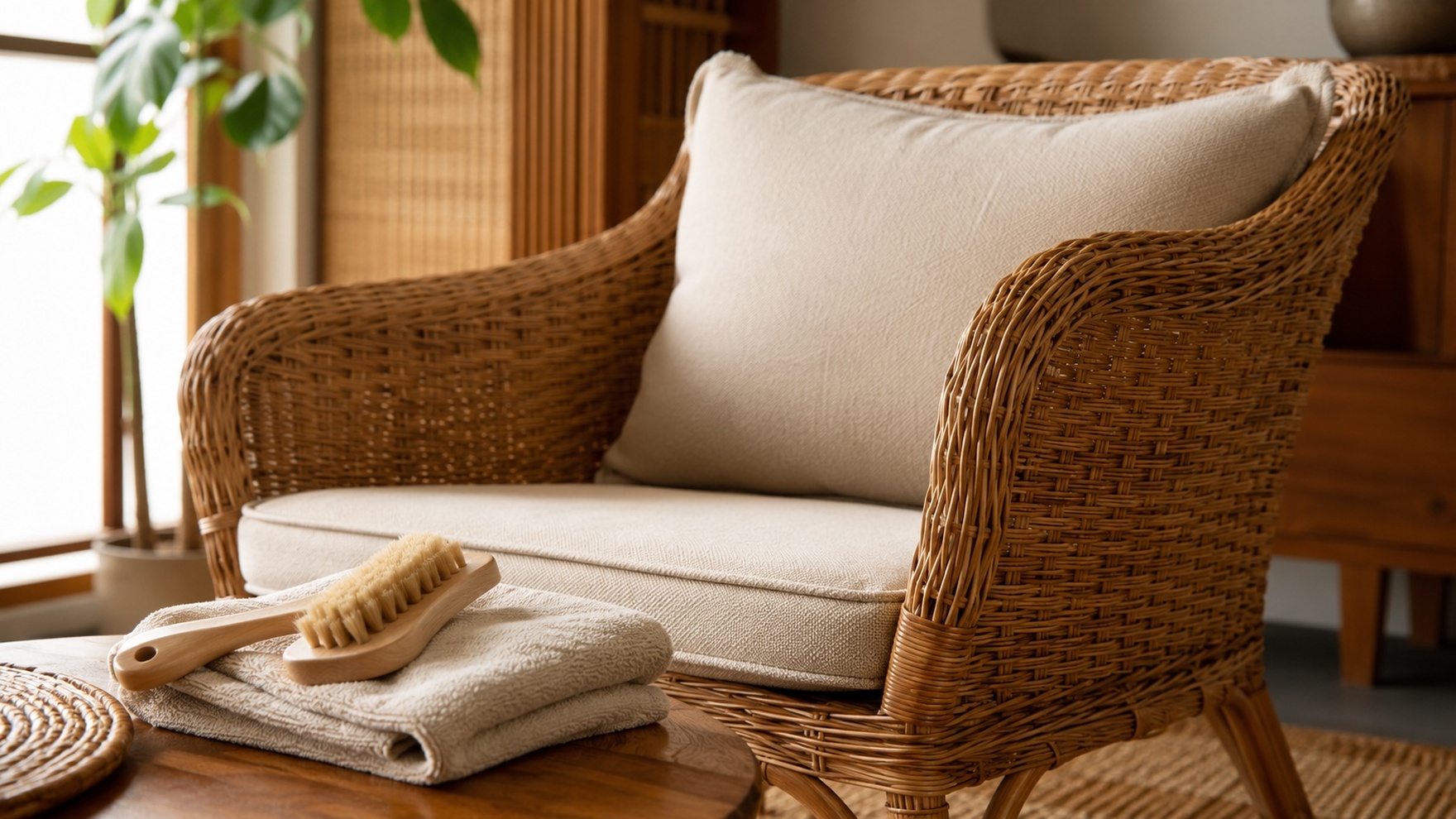
A simple routine keeps rattan looking fresh:
- Dust weekly with a soft brush or dry cloth to reach tight crevices.
- Wipe down monthly with a damp cloth and mild soap solution.
- Dry with a towel, especially in humid rooms or on covered porches.
- Inspect cushions and frames every few months for early signs of wear.
Indoor rattan in living rooms or bedrooms needs less care than patio or porch furniture. Outdoor rattan gathers pollen, dust, and moisture fast. Clean it every two weeks during warmer months. If you’re shopping for new pieces, a well-built wicker coffee table with tight weaving will hold up better under this kind of routine handling.
How To Remove Mold And Mildew From Rattan
Mould thrives in damp, shaded spots, especially where cushions sit against the frame. If you spot dark specks, mix water with a little vinegar and scrub the area with an old toothbrush. Rinse it, then set the piece in direct sunlight to dry completely.
Dehumidifiers protect furniture in any room that stays damp year-round. This step is crucial during heavy rainy seasons to prevent a permanent mold stain.
Fixing Cracked Or Loose Rattan Strands
Furniture develops cracks and sagging strands over time. But that does not mean the piece is beyond repair. Seal small cracks with wood glue using a toothpick or thin spatula. Loose strands need re-weaving back into place and securing underneath.
For bigger fixes, soak the damaged rattan in warm water so the cane softens up before you reshape it. That preventive step preserves heirloom furnishings for years. It also supports long-term rattan care.
Weatherproofing And Seasonal Storage Practices
Outdoor rattan endures sun, rain, and temperature swings. These elements wear down its finish over time. A quality sealant or UV varnish protects the surface. It also keeps the natural color vibrant longer. Apply this coating once or twice a year. It keeps porch and garden furniture sturdy and well-maintained.
When storms arrive, use a waterproof cover or tarp. It shields cushions and frames from heavy rain. Awnings and overhangs provide some natural protection. But they cannot fully block wind-driven moisture. Sustainable rattan furniture responds well to gentle, consistent care. Homeowners who invest in it see great results.
Storing rattan for winter matters as much as daily care. Before winter, move outdoor pieces indoors or into a dry garage, and wrap them with breathable fabric rather than plastic. This allows the fibers to stay ventilated instead of trapping humidity inside.
Good rattan furniture care isn’t about following a rigid checklist. Watch how your pieces react to their environment. Then adjust your routine accordingly. Whether your furniture comes from rattan furniture Indonesia or a local workshop, that same principle of steady, thoughtful maintenance applies. Regular attention keeps your rattan furniture comfortable, sturdy, and stylish for years.