
Walk through a workshop where rattan strips soak and skilled hands tighten cane patterns. You see right away why this old craft still earns respect. It serves a purpose, radiates beauty, and celebrates human craftsmanship today.
As professional furniture makers, we practice traditional weaving every day. This time-honored work teaches patience, order, and truth. Customers ask if handwoven pieces matter in modern homes. Oh, they do, because good materials and real craftsmanship rarely go out of style.
What Traditional Rattan Cane Weaving Means in Art, Culture, and Daily Life
For many readers, the first puzzle is simple. What exactly are we talking about when we say traditional rattan cane weaving? This craft turns raw rattan into woven items like seats, baskets, and screens. It depends on expert touch, exact designs, and passed-down wisdom.
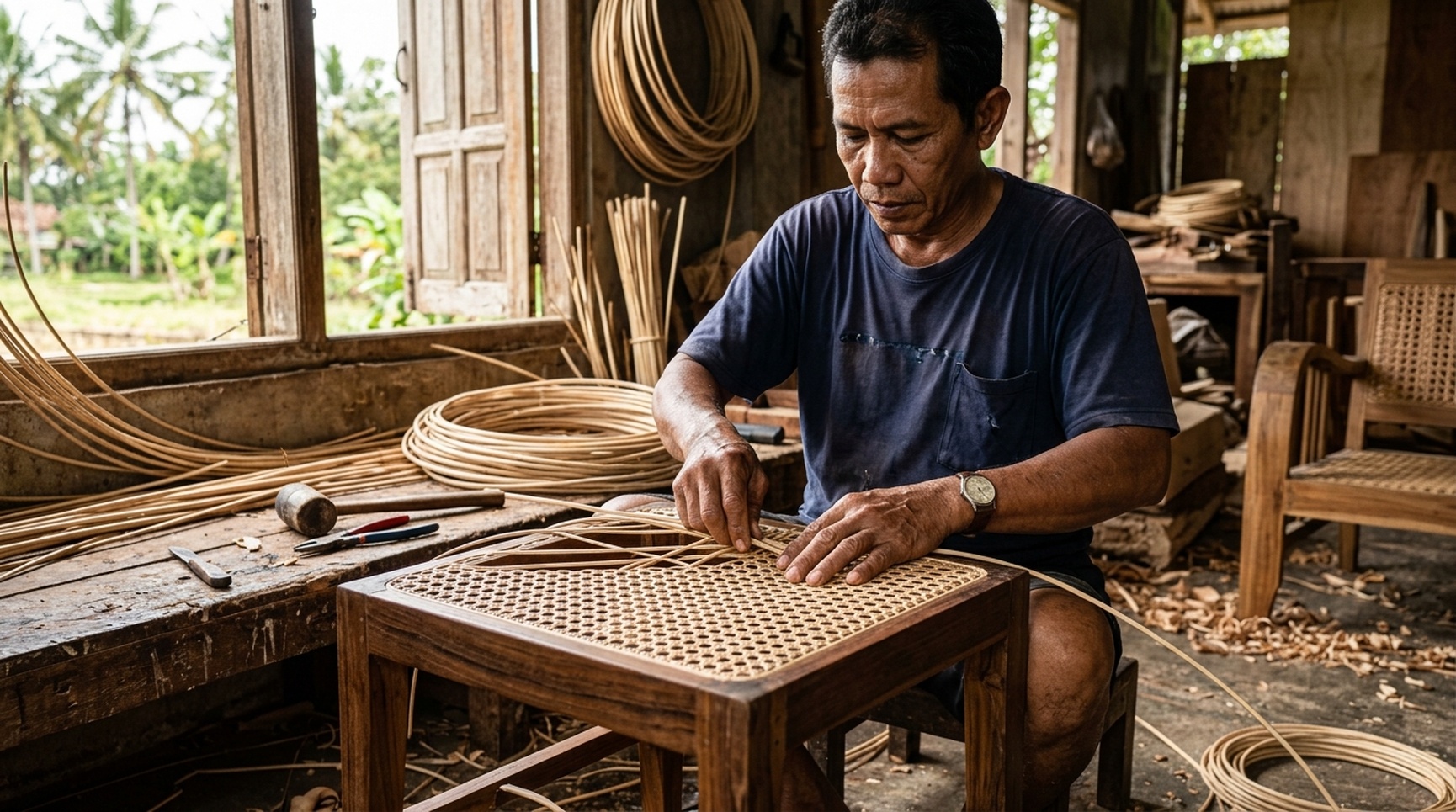
Unlike factory webbing that looks too uniform, traditional weaving carries tiny variations. Those small imperfections are not flaws. They are signs of artisanship, labor, and human judgment. In our line of work, we often say a handwoven surface should feel alive, not asleep.
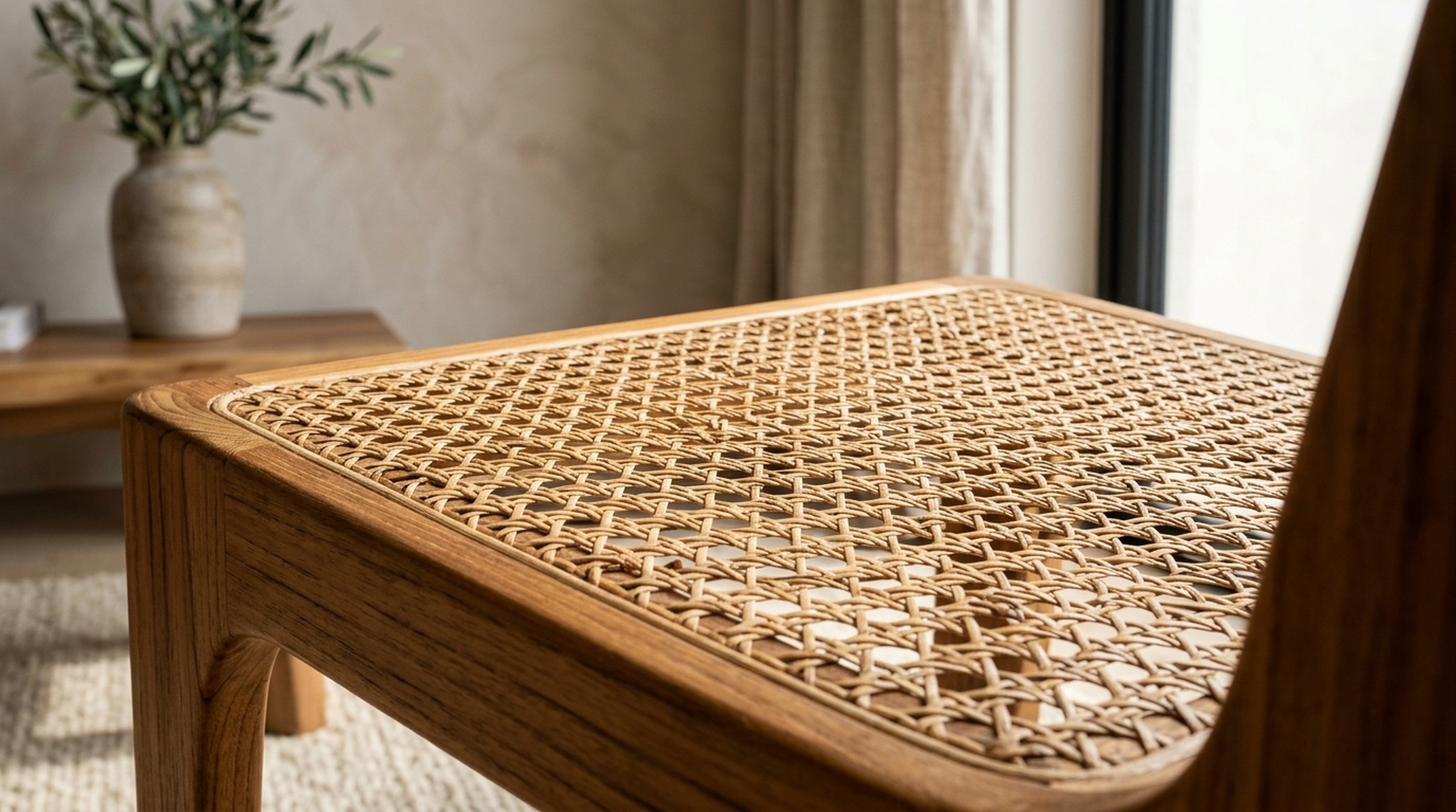
Many Asian cultures gave this old artistry new life. They made it truly beautiful. Indonesian weavers in particular brought massive prominence to these unique designs. Local craftsmen utilized climbing palm vines and raw stem peel. They hand-weaved these natural resources into everyday baskets, chairs, and headboards.
This weaving technique moved through historic kingdoms and Dutch trade routes. However, its ancient origins always embraced nature. That is why old cane designs still feel warm, even in a modern apartment, a keepsake from Sumatra to Sulawesi.
Readers also mix up key terms, and that confusion is fair. Rattan is the natural material from tropical palms. Cane is the peeled outer skin often used in caning and delicate open weaves. Wicker is not a plant at all. It describes the weaving method or style. Explore our complete rattan versus wicker analysis for instant clarity. These specific terms steer your buying decisions. They also govern your maintenance and product expectations.
Here is why traditional weaving still matters in daily life:
- It gives furniture lightweight strength without making rooms feel heavy.
- It supports artisans, apprentices, and local livelihoods tied to handweaving.
- It creates breathable woven surfaces for chairs, pendant shades, panels, and backs.
- It keeps cultural memory alive through pattern, technique, and design language.
That last point matters more than people think. A woven cane seat is not only a seat. It is a record of hands, habits, and judgment. Customers often question why handcrafted footstools cost more than mass-produced versions. We stand behind one core truth. Automated machines copy designs, but Indonesian craftsmen dictate the quality. The room usually gets quiet after that.
How Traditional Rattan Weaving Works and How to Recognize Authentic Craft
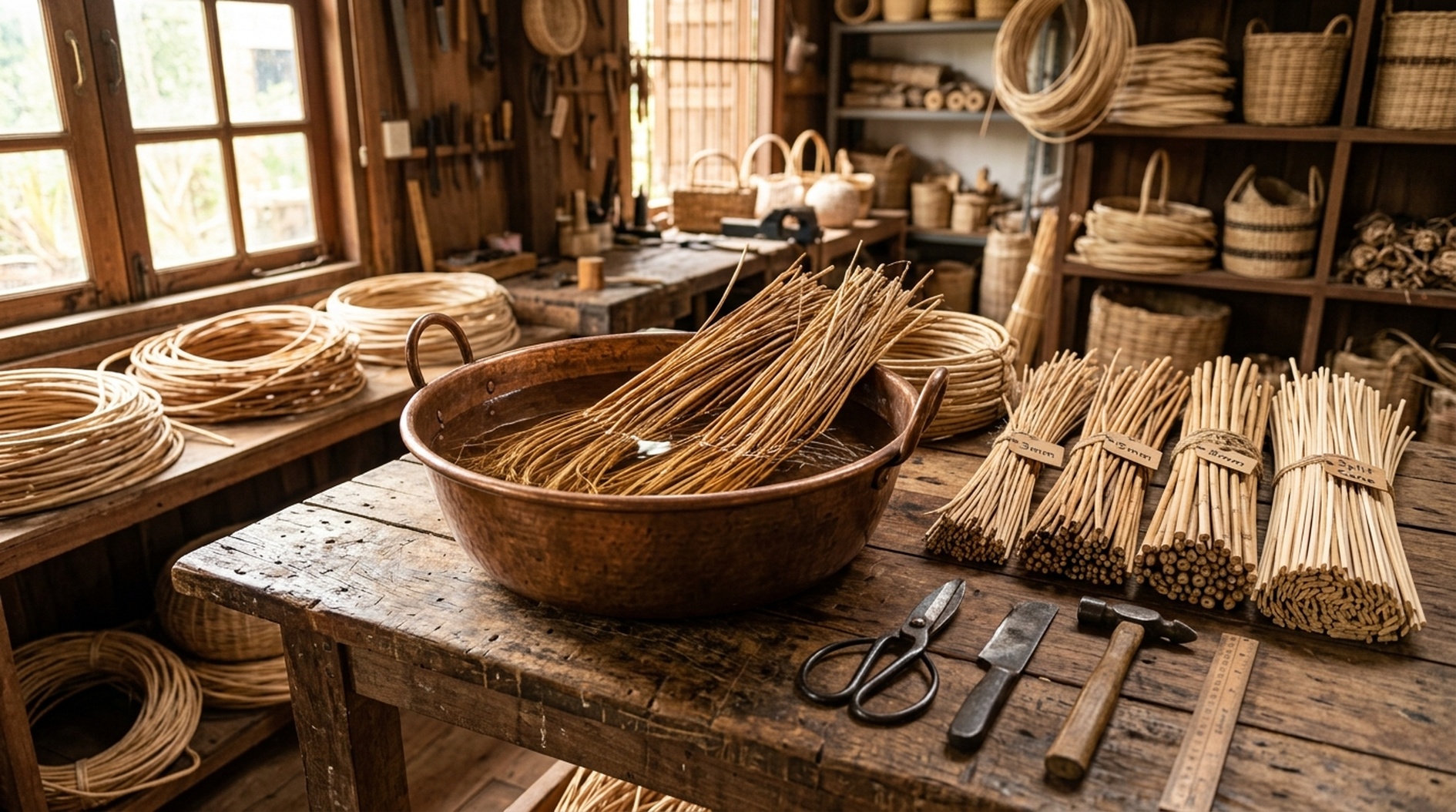
When we explain the process to beginners, we start with the material itself. Rattan offers flexibility, resists wear, and boasts a lightweight feel, but cracks under rushed work. Good makers sort stems by size, widths, and gauges, then process each strand for its purpose. Select pieces anchor the sturdy frames and binders. Other strands transform into clean splints or delicate cane sheeting.
Buyers often assume weaving begins with the pattern. It actually begins with preparation. Craftsmen soak each strand for moisture control before cutting it to width. Then, they trim the underside and shape the fibre around drilled holes. If the material is too dry, it snaps. If it is too wet, the weave loosens and the pattern shifts. Traditional work has a rhythm, almost like listening to rain on a roof. Miss the timing, and everything sounds wrong.
During hand caning, weavers lace individual strands through the chair frame holes. This careful work creates open, angled designs. The final structure determines whether the design shapes into hexagons or octagons. Other projects use pre-woven sheets, but old heirlooms need real hand weaving. We regularly restore unique geometric patterns like herringbone and triangles. Craftsmen apply these detailed designs to classic rocking chairs, screens, and lighting panels.
In our workshops, we teach new makers to inspect four things before they praise a piece:
- Look at the knots, holes, and edges for clean finishing.
- Check whether the pattern stays balanced across the whole frame.
- Feel the surface for even tension, not brittle or sagging spots.
- Turn the piece over and inspect the underside, because true quality hides there.
Still, authenticity is not only about neatness. Some factory goods use resins, additives, or synthetic fibers to imitate natural cane. They may look tidy on day one, but they often lack the lively tone changes and delicate texture of real rattan. Traditional pieces showcase unique color tones and a softer texture. Human hands mold this organic structure instead of cold machinery.
If you are trying to spot real handwoven work, ask smart questions. Was the cane applied by hand or pressed as a sheet? Are the widths consistent enough for strength, but varied enough to look natural? Do the backs, seats, or panels show careful detailing around corners and joinery? In our experience, real craftsmanship never feels cold or stiff.
Another challenge is that many people buy without understanding the material limits. Rattan is strong, but it is still natural. Excessive moisture, direct sun, and rough handling can shorten its life. That does not make it weak. This material commands the same care and respect as solid wood, leather, or antique textiles.
If you want a deeper process view, see the guide I wrote on rattan weaving craftsmanship, where we break down patterns, hand tools, and quality checks in plain language.
Why Traditional Rattan Cane Weaving Fits Modern Homes and Sustainable Living
In modern interiors, traditional rattan weaving works because it solves two problems at once. It adds texture without clutter, and it brings warmth without shouting for attention. Add a woven pendant, cane headboard, or handwoven chair back. These items soften rooms, outperforming heavy materials. Designers love that quiet effect, though yes, sometimes they love it a little too much.
Yet style is only part of the story. Rattan resources suit busy homes well. These lightweight pieces adapt and move across different rooms. Families rearrange screens or chairs without creating a messy construction zone. Want a technical breakdown of structure, sourcing, and durability? Explore our detailed guide on rattan furniture materials.
As a renewable resource, rattan thrives in tropical rainforests. Sustainable sourcing drives quick regrowth. This practice supports local communities working close to the land. This does not mean every product on the market shares the same responsibility. Some factories move too fast, mix poor materials, or ignore careful processing. Genuine manufacturing methods require total transparency. Savvy buyers must investigate fiber origins and processing methods firsthand.
We see this difference every day between rushed goods and durable handcrafted pieces. Rushed furniture looks great in showrooms. However, daily use quickly loosens, cracks, or warps the weave.
Better production takes more time. This premium standard needs skilled hands and steady humidity management. True artisans safeguard their materials and sculpt every single corner. These hidden steps bypass flashy advertising headlines altogether. Instead, they define the unique quality of every finished piece.
Furnishing your home? Traditional rattan weaving upgrades your space in many ways:
- Use woven chairs and backs to keep dining or lounge spaces airy.
- Add cane panels to cabinets or headboards for texture and ventilation.
- Choose baskets, lamp shades, or pendant pieces for decorative balance.
- Mix handwoven surfaces with wood, metal, or upholstery for a modern but grounded style.
Some customers worry that traditional design will feel too antique. We understand that fear. Nobody wants a room that looks like a museum gift shop. The good news is that cane and rattan adapt well to modern lines, customized frames, and cleaner silhouettes. A sleek black frame blends handwoven cane into a fresh, modern design. This look respects old-world skill but never feels dated.
Many people also ask about care. The answer is reassuring. Dust with care, keep the piece dry but not parched, avoid direct heat, and wipe spills fast. Over time, the binding may relax. But restoration can fix it. A good weave ages like a well-used notebook. It carries marks of life, not failure.
Does traditional rattan weaving still matter when machines replicate every design?
The short answer is yes, because copying a look is not the same as carrying a tradition. Real weaving holds knowledge about material behavior, tension, width, structure, and repair. Those things matter when furniture is used, moved, cleaned, and lived with for years.
Another common question is whether handwoven cane is strong enough for daily furniture?
It lasts, provided the frame holds strong and the weaver secures the pattern. We always remind buyers that strength comes from both the weave and the joinery. A beautiful pattern on a weak frame is like a smart roof on a shaky house. It may charm you for a week, then disappoint you by month three.
Many readers wonder how to tell whether a piece is handmade or machine assisted. The quickest clue is the surface rhythm. Handcrafted items showcase natural color tones and unique spacing variations. Weavers master every single edge. Weavers master every single edge. They craft these details by hand.
Machine repeated webbing can look too perfect, almost flat in spirit. Real handcrafted work breathes life. It outshines bland factory production.
Why does traditional weaving captivate our hearts?
This ancient craft touches everyone, including newcomers who never grew up around it. The real reason is simple. Humans respond to evidence of hands. A woven seat, basket, or lamp shade shows decisions, pauses, and skill. It reminds us that objects can carry care. That kind of presence is rare in a world full of rushed goods and forgettable surfaces.
Finally, here is a question we often get from both careful buyers and wholesalers. Why should we keep choosing traditional rattan work now? This ancient industry celebrates global culture and provides key resources for local craftsmen. Every unique design adds meaning far beyond mere decoration. It offers utility, beauty, and a legacy you can touch.
If you value that level of integrity, speak with our production team. As a dedicated rattan furniture manufacturer, we manage every detail so your pieces stay honest from frame to final strand.